Responding to a Generation in Need
Bakken Center Continues to Significantly Impact Mental Health of University Students
June 23, 2026
Kylie Shafferkoetter
Young adults are going through it.
The Earl E. Bakken Center for Spirituality & Healing is here to help.
With its multi-pronged, strategic approach including offering courses focusing on a variety of topics, HeART of Healing programming just for students, and integrating the Center’s WEL Model in other colleges and units across the University, the Bakken Center is working hard to find new ways to improve student mental health and wellbeing across campus.
Anxiety about the future and the world at large, financial worries, loneliness, depression, and lack of purpose are some of the reasons experts point to for why today’s 18-25-year-olds’ mental health is suffering.
According to the National Institute of Mental Health, young adults reported the highest prevalence of mental health issues of any other cohort. One in three college students experience depression and anxiety per The Healthy Minds Network annual survey of more than 84,000 students at 135 colleges and universities.
Through campus-wide engagement, faculty development, courses, online resources and collaborations, the Bakken Center is carving out paths to reach all University of Minnesota students.
“The Bakken Center supports student mental health and wellbeing because we see wellbeing as foundational to learning and we believe students should graduate not just with knowledge, but with the skills to sustain their own wellbeing and contribute to thriving communities,” says Dr. Mary Jo Kreitzer, the Center’s founder and director. “We support student wellbeing inside and beyond the classroom. Within the classroom, we work with faculty on identifying practices they can use to reduce stress and enhance learning. We also offer many academic courses that teach life-long skills.”
Surveyed students reported that Center courses helped them manage stress, anxiety, depression, insomnia, and more.
“Our overall approach focuses on prevention and skill-building through programs, experiences, and academic courses. Students are very engaged in the Bakken Center and we learn from them what is needed and most helpful,” Dr. Kreitzer says.
Students commonly cite isolation, disconnection, and identity challenges as major contributors to their struggles.
The Center addresses these challenges through multiple channels, including campus-wide wellbeing events and academic and community courses on everything from nutrition and meditation to peacebuilding and animal therapy. In addition, the newly restructured WEL Model serves as a resource for faculty and staff in other colleges and units who are seeking to support wellbeing through teaching and learning practices.
Students earn credit while supporting their mental health
The Center offers more than 70 academic courses open to current students at the University of Minnesota.
Implications of Social Media and Mental Health, Introduction to Mindfulness-Based Stress Reduction and Living on Purpose: An Exploration of Self, Purpose and Community are just some of the titles available.
“We have a pretty unique way of looking at our academic courses to make sure they have an added aspect of supporting student wellbeing,” says Erin Fider, the Center’s student services and academic programs coordinator. “Our courses encourage students to be reflective, to find their sense of self, and to apply these concepts in their lives and careers, without taking away from academic rigor.”
Just seeing the sheer volume of students who take Center classes - about 2,000 across the university each year – is exciting to Fider. “We are bringing this content to students and not only teaching them about integrative modalities, but also about how to implement mental health and wellbeing practices into their personal lives,” she says.
Students are responding.
“I experience Bakken Center courses as more experiential and reflective compared to my other UMN courses. They emphasize personal wellbeing, integrative practices, and self-awareness, whereas my nursing courses focus more on clinical knowledge, systems, and quality improvement,” a student shares. “Both are rigorous, but the Bakken Center courses create space for inner exploration and skill-building in ways that feel distinct and complementary.”
For Emily Peterson, an MBA student who took Music for Wellbeing in Times of Stress and Anxiety, taught by Dr. Jenzi Silverman, the class helped her to “reconnect to music in general, using it for joy and in times of need, using it intentionally rather than passively, and being more mindful of it. Reconnecting to my love for it overall opened back up my creativity, inner joy, and passions,” she says.
Fider believes helping students now can change the trajectory of their lives. “They take what they learn with them into their careers. In addition to those pursuing the health sciences, we get students from a variety of other colleges that include the Carlson School of Management, the College of Science & Engineering, and students in our minor who do things like combine landscape architecture with nature-based therapeutics. All of this is bubbling out and expanding into so many different majors and disciplines,” Fider says.
"Every person who works here is dedicated to supporting students in whatever ways we can," Fider continues. "Maybe we are leading the way a bit in modeling a holistic approach that uplifts the whole person in addition to promoting academic wellbeing. It’s our expertise at the Center and we are always happy to share it by collaborating across campus."
HeART of Healing
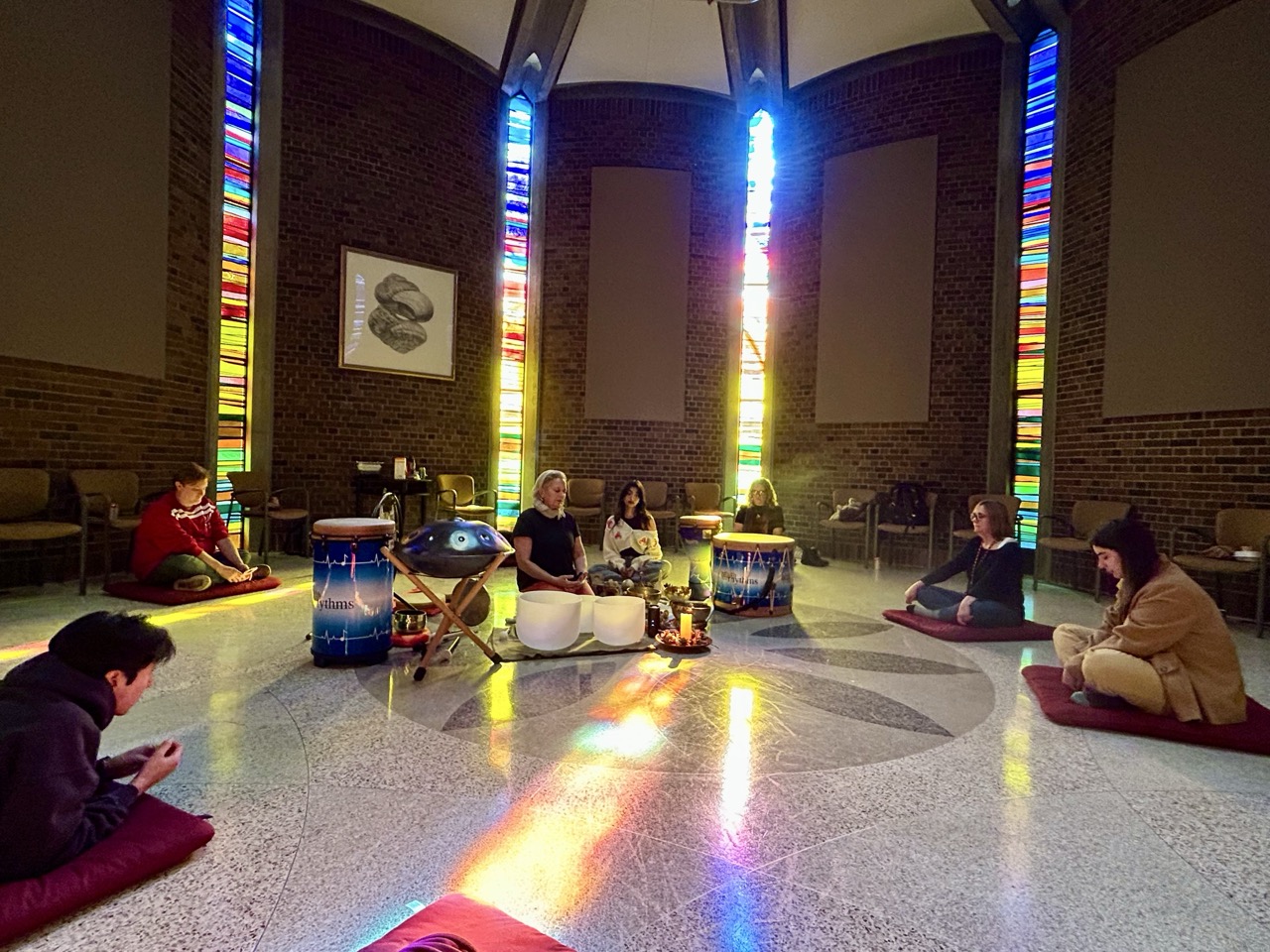
HeART of Healing is a newer initiative that expands the Center’s long-standing commitment to arts and wellbeing. Sound baths, a monthly creative sanctuary, and healing circles are some of the options available throughout the year. HeART of Healing brings arts and wellbeing programming into campus and community settings. These offerings reflect an integrative health approach that supports whole-person health - bringing together mind, body, and spirit through creative, relational, and experiential practices,” explains Molly Sturges, HeART of Healing director, who is also a United States Artist Fellow in Music and senior researcher with a focus on therapeutic sound, music, and contemplative practice at the University's Medical School.
"Our programming supports mental health. We seek to contribute to more connected and restorative environments where people can show up just as they are,” Sturges says. “We strive to create accessible ways for people to experience rest, meaningful connection, and positive and healing relationships with themselves, each other, and the living world.”
Sturges facilitates many of the experiences herself, including story circles, participatory visual arts projects, nature walks, and the sound baths.
“These spaces allow people to be together in shared spaces while also having their own personal time for rest, reflection, and integration,” she explains. “There are both individual and collective dimensions to the HeART of Healing experiences.”
Sturges also teaches two courses related to this work; Personal Wellbeing: The Journey of Self-Care and Creating Connected Communities.
Extending its impact beyond classes and sensory events, the Center’s business development and community relations team supports student mental health by providing accessible, practical wellbeing resources and programming. This includes sharing evidence-based articles and micro-practices through community newsletters; maintaining a free, student-focused section on the Center’s community website, Taking Charge of Your Wellbeing in partnership with the Center’s communications team; and offering inclusive programming such as mindfulness webinars, explains Sue Nankivell, Center director of business development and community relations.
Additionally, Nankivell and her team put together cooking and nutrition workshops like Nourishment in Every Season: Online Cooking and Nutrition Workshops; weekly Mindful Mondays webinars; and creative healing activities available online to all students, often at no cost. The team collaborates with student groups and campus partners to deliver engaging experiences like yoga, art-based activities, and wellness events that foster connection and emotional wellbeing.
“We support a variety of student groups, including Minnesota Carlson's Student Wellness Club, University Honors Student Association, Noor Project, and NAMI UMN Student Group,” Nankivell says.
The Center also participates in broader university student events offered by the Weisman Art Museum, Northrop, the Office for Sustainability, the Multicultural Student Engagement office, the Multicultural Center for Academic Excellence, the First-Generation Student Success Center, and many more.
“We work to reach students in a variety of ways and levels,” Nankivell explains.
The Center will further expand its commitment to mental health and wellbeing in its new strategic plan. Resources like the Wellbeing Guide; student-focused articles and resources on the Taking Charge of Your Wellbeing website; the student newsletter, You Do Matter Minnesota; arts and wellbeing programs and events; and many ongoing initiatives are available to students free of charge.