A World Beyond Ourselves
There are many things in life we don’t notice or fully appreciate simply because we are too close to view them within a greater context of space and time.
February 26, 2026
Craig Blacklock
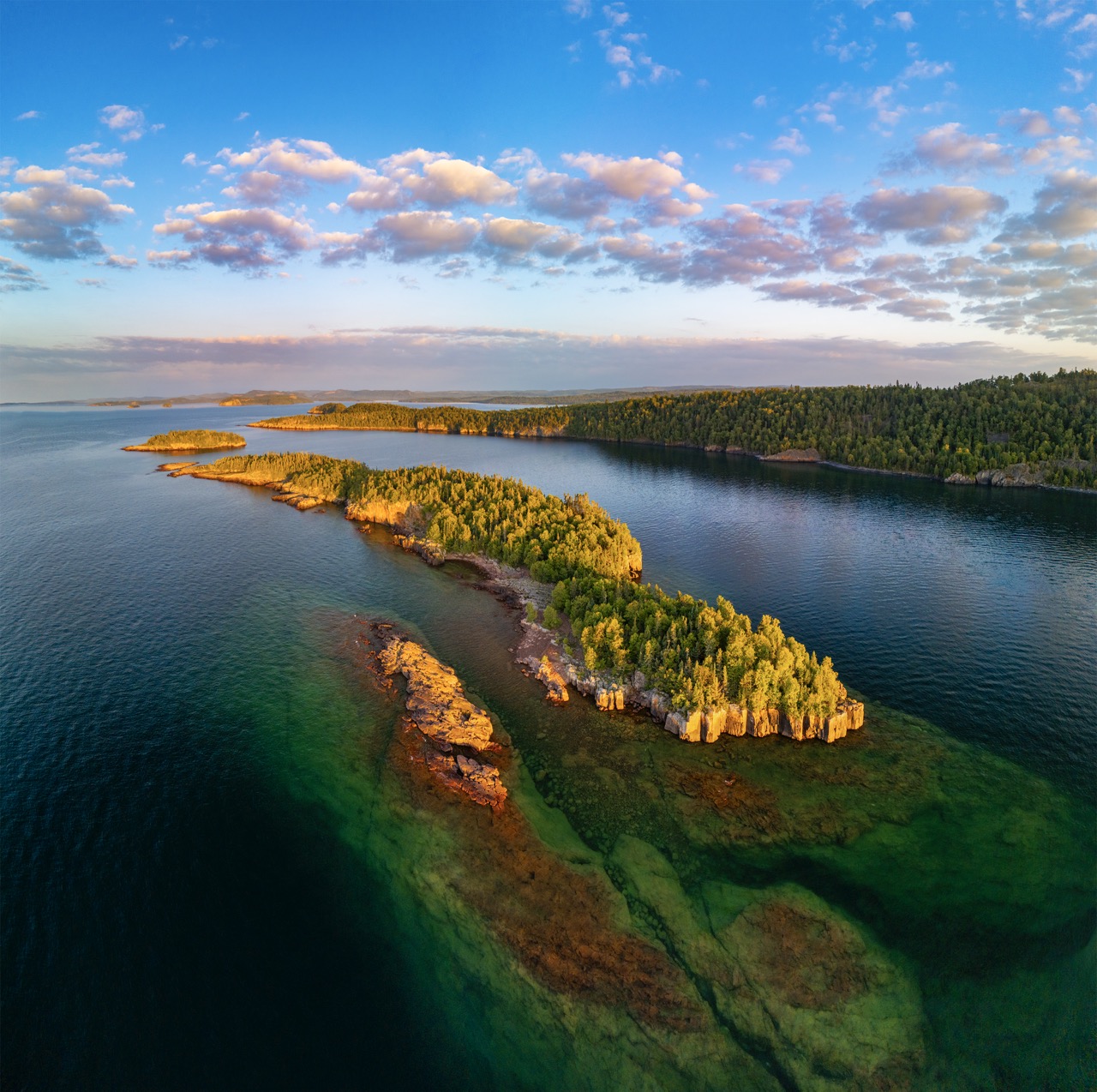
There are many things in life we don’t notice or fully appreciate simply because we are too close to view them within a greater context of space and time. This summer, while kayaking among islands on the Canadian shore of Lake Superior, my attention was on the lichen-covered cliffs and rocky outcrops. Only by backing away and viewing the scene via a drone was I able to discover the spectacular beauty of the emerald waters surrounding the islands and the blackness of the depths. Islands that towered over me from my kayaker’s perspective became a part of the larger Lake Superior ecosystem.
The magic of the dawn was changing as rapidly as my drone’s battery was becoming depleted—compressing the moment. Each second of the privilege of witnessing this eagle’s-view of the morning was precious.
As it turned out, due to an injury exacerbated on this trip, it would be my only paddling trip of the summer. My dad used to say we could not fully appreciate the concept of cozy if it were not for our bitterly cold Minnesota winters. Similarly, my appreciation of being able to witness scenes like this is intensified by my knowledge that such moments are finite. Whether next year or ten years from now, there will come a point at which my only access to such beauty will be through the photography done by others—photographs that expand our view of the natural world and have the ability to freeze or lengthen time, allowing us a broader perspective and deeper understanding of the Earth, its inhabitants, and of ourselves.
As we struggle with the important issues facing our planet’s future, it is imperative that we view them from beyond the vicinity and timeframe of our personal lives. When contemplating what you can do as an individual, before making any decision, ask yourself, “What would the long-term impacts on the world be if every one of the more than 8 billion people on Earth took the same action?” When approached in that selfless context and a willingness to consider not only others alive now but generations from now, I believe we would lead dramatically different lives and feel good about doing so rather than resentful, restricted, or impoverished.


