Fostering a Healthy Workplace
Integrating wellbeing into diversity and inclusion efforts to create a healthier, happier, and more resilient workplace
March 4, 2026
Heidi Wachter

Virajita Singh describes her discovery of the Chief Diversity and Inclusion Officer role at the Minneapolis Institute of Art (Mia) as a moment of serendipity. She wasn’t actively seeking a career change, but the long-time museum volunteer felt drawn to the opportunity to weave wellbeing into diversity and inclusion work. “It was the post-COVID mentality—you might say that life is short,” she says. “If something’s calling, maybe it’s a good idea to do it.”
Since 2022, Singh has brought a holistic approach to creating diversity, equity, inclusion, and belonging (DEIB) at Mia by focusing on improving wellbeing. “We provide some of our best energy at work,” Singh says. “Especially post-COVID, we cannot ask people to give their best without also supporting their wellbeing. Inclusion means seeing people as whole—supporting them in all aspects of their lives.”
Singh’s approach is supported by research showing the interconnection between wellbeing and diversity. Studies show that workplaces with integrated wellbeing and diversity, equity, inclusion, and belonging efforts have higher employee satisfaction and retention rates. This is especially important for underrepresented groups who often face health disparities.
An Empowering Approach
By fostering an inclusive culture that emphasizes wellbeing, organizations can support employee health and decrease workplace stress. But there’s no one-size-fits-all approach to wellbeing. So, when Singh sought innovative ways to improve the resilience of Mia’s workforce, she knew just where to turn.
Singh was familiar with the Earl E. Bakken Center for Spirituality & Healing’s whole-person health programming from her 25-year stint at the University of Minnesota.
“The Bakken Center is thrilled to partner with community organizations such as Mia that inspire us with their commitment to creating a culture of wellbeing,” says Dr. Mary Jo Kreitzer, founder and director of the Bakken Center.
The Center’s longstanding commitment to advancing whole health and wellbeing by delivering innovative community engagement programs aligns with Singh’s approach to her work, inspired by design thinking from her training as an architect.
“Design thinking is about creating well-designed systems that not only provide the best for people but also empower them to shape their own lives,” Singh says.
The second part of Singh’s approach—the importance of partnership and participatory community engagement—is influenced by her background in partnership studies.
Collaborative change is best done through partnership, Singh explains, so that everyone involved has a voice and is included in the decision-making process. She turned to the Bakken Center to help bring this vision to life.
Center staff met regularly with Mia staff members and leadership to understand the organization’s culture and unique challenges – as well as goals and aspirations.
According to Molly Manko, the community relations program and events manager at the Bakken Center, customizing workshops and activities based on this feedback has been a key to success. “Mia takes feedback seriously and provides opportunities for all different interests, meeting people where they are,” she says.
The programming has been wide-ranging. “We have delivered a diverse set of wellbeing programs,” says Sue Nankivell, the Bakken Center’s director of business development and community relations.
A “Renewal Series” included workshops on stress management techniques and strategies for improving sleep. A local chef and integrative physician presented a workshop that taught employees how to nourish their bodies in ways that promote balance.
An animal-assisted interaction workshop allowed staff the opportunity to connect with therapy animals, including two dogs, a cat, two bunnies, and even a mini horse. A guided forest bathing session took advantage of Mia’s beautiful onsite outdoor space, Target Park, to allow staff to rejuvenate and reduce stress by connecting with nature.
Lessons Learned
The collaboration between the Bakken Center and Mia has had a notable impact on the Center’s approach to its work, particularly in terms of expanding the scope, creativity, and customization of its wellbeing programming.
“We’ve never delivered this variety of programming to one organization over such a sustained period, which has given us new insights on what types of programming we can deliver and how,” Nankivell says. “Mia’s employees are creative and open-minded to different types of programs, so it has encouraged us to explore new and innovative ways to offer wellbeing services that wouldn’t necessarily fit into more formal or corporate environments,” Manko says.
Singh says the success of the wellbeing programming has been reflected in Mia’s culture surveys, where employees mentioned their appreciation for these activities. One survey response stated, “We love animals and yoga,” highlighting a potential offering of goat yoga, where individuals practice yoga and then spend time with goats.
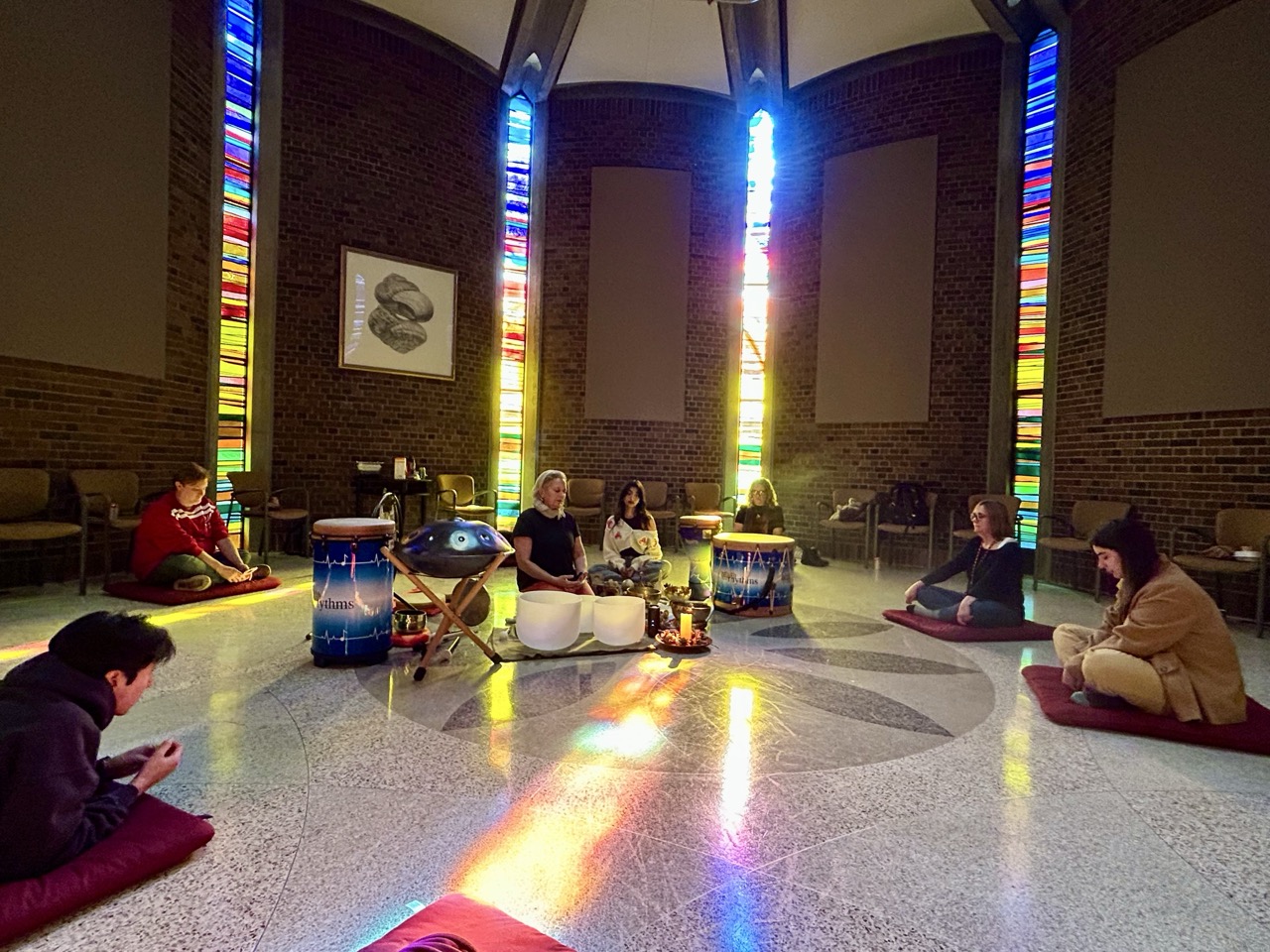
Positive feedback on a sound garden installation, an immersive environment where Mia staff could explore an eco-system of layered nature sounds, has encouraged the Center to consider integrating arts-based programming more broadly into its offerings for other clients.
“The partnership with Mia has allowed the Center to demonstrate how artistic experiences can promote emotional and mental health,” Nankivell adds.
The Mia-Bakken Center collaboration provides a blueprint for how art, inclusion, and wellbeing can transform workplaces. Continuing to explore innovative fields of study like neuroarts, which combines neuroscience and the arts to promote wellbeing, the collaborators can push the boundaries of what wellbeing means in creative, inclusive spaces. Singh also thinks there are opportunities to share the museum’s spaces and collection to improve wellbeing with the University and broader communities. “The possibilities are endless,” she says.